Why Is ANOVA a Revolution in Decision Making?
5/3/20261 min read
Higher Averages Do Not Mean Better Decisions
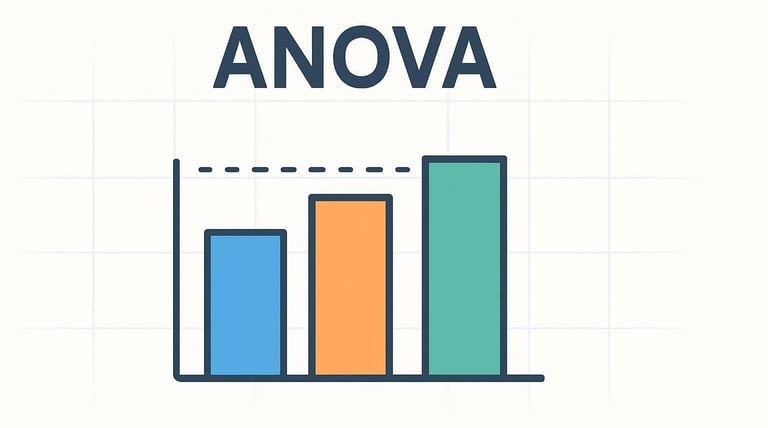
In most commercial scenarios, decision-makers use simple averages to compare results. For example, one advertisement may have an average score that is greater for consumer engagement than other ads. Despite this, focusing only on averages can be inaccurate, as differences may appear important even when they are the result of random occurrence rather than true performance differences.
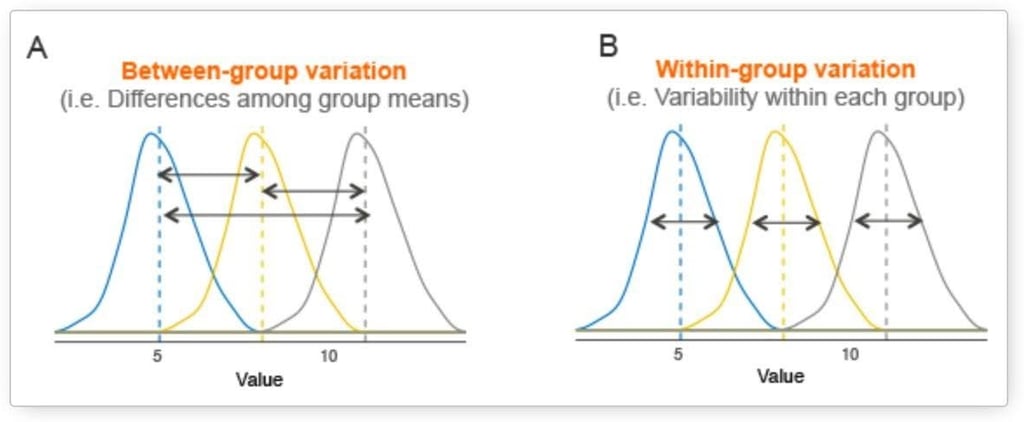
It is not a secret that analysis of variance (ANOVA) is considered one of the most helpful advanced analytical tools for addressing issues. ANOVA is a kind of difference analysis that determines the statistical significance of the differences between the means of several groups. It examines how those variances are trustworthy enough to assist in making decisions rather than merely comparing numbers. This is particularly helpful when contrasting various tactics, like different item differences and pricing schemes. Furthermore, we can use ANOVA when we have 3 or more dependent variables, and if we have only 2 variables to test the differences, we need to use the T-test analysis.
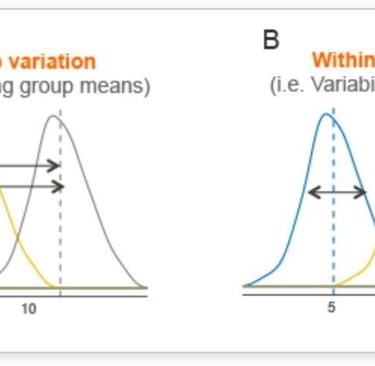
Eliminating Guesswork Through Statistical Significance
ANOVA's primary advantage is that it keeps companies from making standard assumptions while forming judgments. Businesses can make decisions according to expense or productivity in operation if the research reveals that there is no statistically significant difference, indicating that all the options perform equally. However, if a significant difference is discovered, it gives straightforward guidance on which method should be prioritized. To interpret results, we need to take a look at the P-value and decide whether there is significance or not. The main rule is that if the P-value is greater than 0.05, then there is no statistical significance. And if the P-value is equal to or less than 0.05, then there is a statistical significance.
Founder & CEO, MayI Growth - Kanan Aliyev
Contact
Reach out for growth advice anytime.
© 2025. All rights reserved.